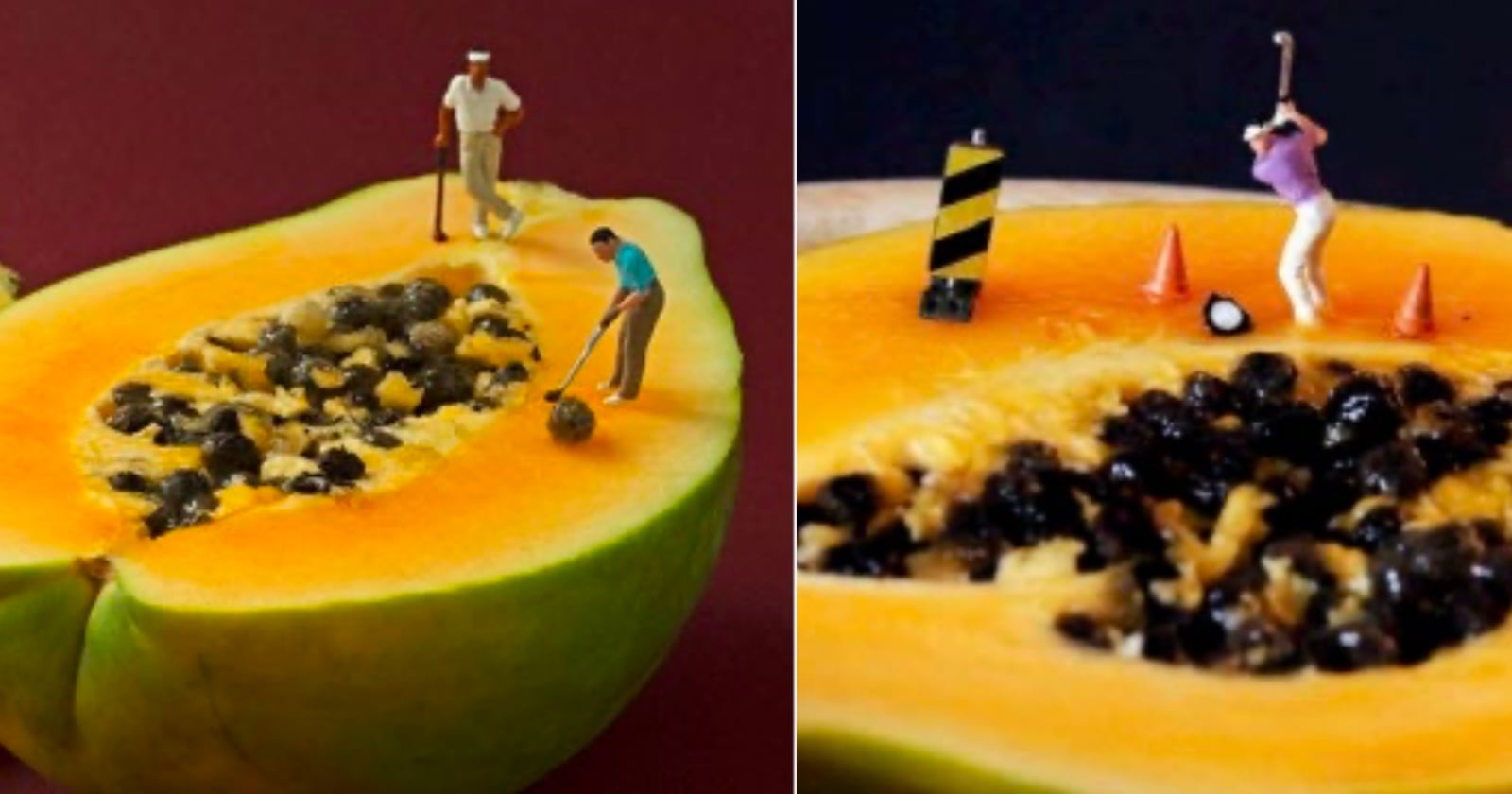
In an intriguing intersection of art and law, two photographers are currently facing each other in court over a series of delightful images depicting miniature golfers playing on the vibrant surface of a halved papaya. This case not only highlights the unique creativity that photographers can bring to their work but also raises essential questions about the boundaries of originality and artistic ownership in the ever-evolving landscape of photography. For those invested in the craft, this legal battle serves as a critical reminder of the significance of creativity in our work, especially in a world saturated with visual content.
The images at the center of the dispute feature small figurines in whimsical poses, surrounded by props that enhance the playful scenes, such as cones and flags that mimic a golfing environment. These creative setups challenge photographers to think outside the box and experiment with their composition and lighting techniques. For aspiring photographers, understanding how to effectively stage and light such scenes can elevate their work and set them apart in a competitive market.
In creating these striking images, both photographers utilized specific technical approaches that are worth analyzing. The choice of a papaya fruit as a backdrop not only adds a unique texture and color contrast but also provides a playful narrative element that captures the viewer's imagination. The lighting in these photographs is crucial; soft, diffused light enhances the vibrancy of the papaya while ensuring that the miniature figures are well-illuminated without harsh shadows, a technique that can be applied in various photography genres. Additionally, the careful arrangement of props around the figurines can lead to dynamic compositions, encouraging movement and storytelling within a still frame.
As this case unfolds, it exists within a broader context of creative rights and the implications of digital reproduction in the world of photography. With the rise of social media and an ever-growing number of online platforms for showcasing work, the lines between inspiration and imitation have become increasingly blurred. Photographers must grapple with the potential for their unique styles to be emulated or even appropriated, raising important ethical considerations about how to protect one's creative output while still engaging with the community.
CuraFeed Take: This ongoing legal battle is a stark reminder of the need for photographers to cultivate their distinctive voice and style. While the outcome may have implications for the two involved, it ultimately reinforces the importance of originality in an industry that thrives on creativity. For photographers, this is an opportunity to reflect on their own work and consider how they can innovate within their craft, ensuring that their distinctive perspectives shine through in every shot. Moving forward, it will be essential to watch how this case influences discussions around artistic ownership, especially in a digital age where sharing and collaboration are commonplace.